257 Unique and Interesting Fun Facts by Country
Updated: Sep 27, 2026
Did you know that not all world countries are recognized equally by other countries. There are about 200 countries in the world, give and take, depending on what definition of a country do you follow. There are debates about what defines a statehood and not everyone agrees.
According to the United Nations, there are 195 recognized countries. However, if you count partially recognized states, the number increases to 197. Additionally, if you include breakaway states with no formal U.N. recognition, the total reaches 209. The International Olympic Committee recognizes 206 member nations.
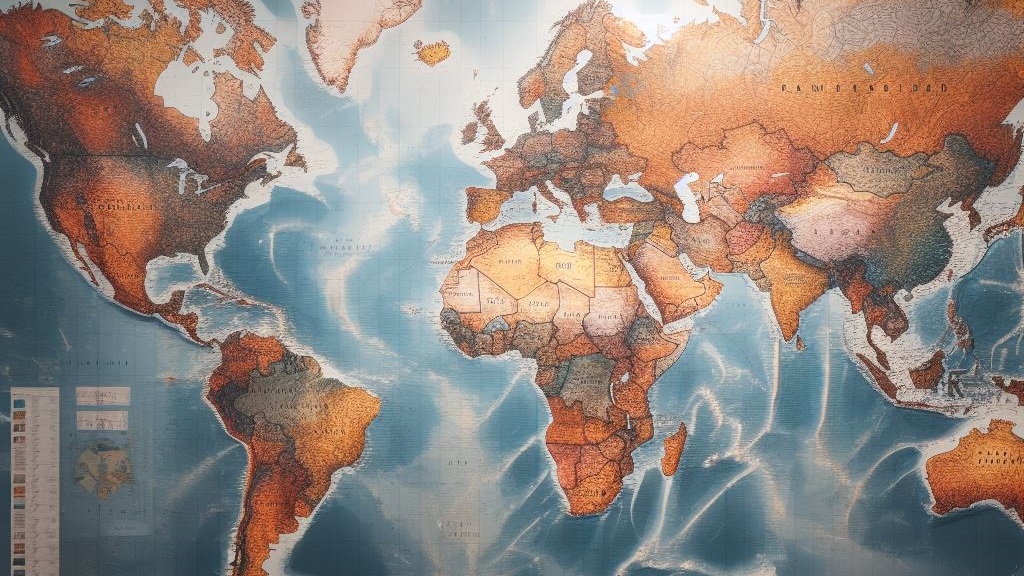
Each world country is unique in its own way. From the sunny beaches of the Caribbean to the frosty tundras of Siberia, every part of the world has something unique to offer. No matter how far-flung, each country of our planet reveals the rich tapestry of cultures, traditions, and natural phenomena that make up our shared experiences. Each country’s unique characteristic is a treasure waiting to be unearthed. In this article of unique and interesting facts about world countries, we dive into the characteristics that define and distinguish each country.
Asia
We'll start with Asia, home to more than half of the world's population. Asia holds over 60% of the global human population - more people live inside the borders of the Asian continent than in the rest of the entire world combined. Asia is also the largest continent on Earth, sprawling across roughly 30% of the planet's total land area. It is so massive that it covers more total surface area than the entire face of the moon.
Bangladesh
Bangladesh is the most densily populated large country in the world. It packs about 3,000 people per square mile. Compare this to Russia (comparable population) which has about 21 people per square mile, or Greece (comparable size) which has about 200 people per square mile.
Bangladesh is the only country in the world with the country name ending in letter H.
Cambodia
Cambodia has no McDonald’s restaurants and never had a McDonald’s in the country due to its strong local food culture.
China
In 2023 China was surpassed by India as world's most populous country and is now the world's 2nd most populated country.
Did you know that the Ping pong is one of the most popular sports in China. China has won more Olympic table-tennis medals than any other country through the 2024 Olympic Games.
Did you also know that China follows one single Time Zone even though it is one of the largest countries in the world by area.
India
India is now the world's most populated country, more populated than China as of 2023.
India is the country which produces the most mangoes in the world with over 20 million tonnes of mangoes produced every year.
India recognizes English as an associate official language, alongside Hindi for central-government purposes. India has the second largest english speaking population in the world if you include population that speaks english as their second or third language.
India is the largest democracy in the world.
India is the birthplace of Chess. Chess developed from the Indian strategy game chaturanga, which spread westward and eventually evolved into modern chess.
Indian mathematicians helped develop the decimal place-value system and formalized the use of zero as a number. The 10-base numeral system for writing numbers was developed in India sometime between 1st and 4th century AD.
India is the world’s largest exporter of rice and is particularly known for its fragrant basmati rice.
Indonesia
Indonesia is home to the largest lizard on Earth, the Komodo dragon, which can be found in the Komodo National Park.
Indonesia is the largest archipelagic country in the world. Indonesia consists of thousands of islands spread across the Indian and Pacific oceans; the exact total varies according to the definition of an island. By some estimates, Indonesia has over 17,000 islands, about 6,000 of them are inhabited, making it one of the largest archipelagos in the world.
Indonesia has the largest Muslim population in the world with about 230M. Next are Pakistan and India with about 200M each and then Bangladesh with about 130M.
Japan
Japan has more than 6,800 islands.
Japan is known for its bullet trains, which can travel up to speeds of 320 km/h.
Japan has one of the world’s highest life expectancies. Japanese average life expectancy for women have frequently ranked top globally - ranking highest for the 41st consecutive year as of 2025. Japan's average life expectancy is approximately 87.33 years for women and 81.35 years for men, according to its official data.
Iran
McDonald's is not allowed to operate in Iran due to its government's disapproval of Western culture.
Malaysia
Malaysia has a unique constitutional monarchy where nine royal rulers take turns serving as the supreme head of state (the Yang di-Pertuan Agong) every five years.
Malaysia is home to Rafflesia arnoldii, the largest individual flower in the world, which can grow over a meter wide and emits a scent like rotting flesh.
Malaysia's Taman Negara is estimated to be around 130 million years old, making it one of the oldest tropical rainforests on the planet.
The Petronas Towers in Kuala Lumpur stand 452 meters (1,483 feet) tall and were once the tallest buildings in the world. The Petronas Towers remain the tallest twin towers in the world.
Sarawak Chamber in Malaysia's Gunung Mulu National Park on Borneo is the largest known cave chamber by volume in the world.
The Guinness World Records lists the Putrajaya Roundabout in Malaysia as the world's largest roundabout with 3.4 kilometers circumference and 15 different entry and exit points.
North Korea
McDonald's is not allowed to operate in North Korea due to its government's disapproval of Western culture.
Philippines
Puerto-Princesa Subterranean River in Palawan, Philippines is one of the longest underground rivers in the world.
Philippines is made up of over 7,600 islands, making it one of the largest archipelagos in the world.
Thailand
Thailand is the only country in Southeast Asia that has never been colonized by Europeans.
Thailand is one of the world’s major rice exporters and is particularly known for fragrant jasmine rice.
Thailand is the world’s number one orchid exporter.
Vietnam
Vietnam is a major global processor and exporter of cashews. It exports over a third of the world’s cashew nuts every year. Vietnam is also one of the leading exporters of black pepper.
Afghanistan
Afghanistan contains the Bamiyan Valley, which was once famous for enormous Buddha statues carved into cliffs. Lapis lazuli has been mined in the region for thousands of years and was used in jewelry, decoration, and ancient artwork.
Armenia
Armenia is traditionally regarded as the first country to adopt Christianity as its state religion. Lake Sevan is one of the largest high-altitude freshwater lakes in the world and is an important source of water, fish, and tourism.
Azerbaijan
Azerbaijan is sometimes called the “Land of Fire” because of natural gas flames and ancient fire-worship traditions. Baku is one of the world’s lowest-lying capital cities and sits on the shore of the Caspian Sea.
Bahrain
Bahrain is an island kingdom in the Persian Gulf. It was once the center of the ancient Dilmun civilization, which controlled important trade routes between Mesopotamia and the Indus Valley.
Bhutan
Bhutan uses Gross National Happiness as one way to discuss national progress. It is also widely described as carbon negative because its forests absorb more carbon dioxide than the country produces.
Brunei
Brunei is one of the world’s remaining absolute monarchies. Kampong Ayer is a historic settlement built over the Brunei River, where homes, schools, mosques, and shops are connected by wooden walkways.
Georgia
Georgia is one of the oldest wine-producing regions in the world. Traditional wine is often made in large clay vessels called qvevri, which are buried underground during fermentation and storage.
Iraq
Mesopotamia, located between the Tigris and Euphrates rivers, was home to some of the world’s earliest cities and writing systems. The ancient city of Babylon, with its famous cultural and religious history, lies within modern Iraq.
Israel
The Dead Sea is one of the lowest exposed land areas on Earth. Its water contains so much salt that most people can float easily, although the water is too salty for most plants and animals to survive.
Jordan
Petra was carved into rose-colored sandstone and became an important trading center in the ancient world. Jordan also contains part of the Dead Sea shoreline, where visitors can float because of the water’s high salt concentration.
Kazakhstan
Kazakhstan is the world’s largest landlocked country. The Baikonur Cosmodrome was the launch site of Yuri Gagarin, who became the first human to travel into space.
Kuwait
Kuwait was among the earliest Gulf states to establish a formal parliament. Its name comes from an Arabic word associated with a small fortified settlement.
Kyrgyzstan
Lake Issyk-Kul is one of the largest high-altitude lakes in the world. The country is extremely mountainous, and the Tian Shan range covers much of its landscape.
Laos
Laos is the only landlocked country in Southeast Asia. The Plain of Jars contains thousands of large stone vessels whose exact original purpose remains a subject of archaeological study.
Lebanon
The cedar tree is a national symbol of Lebanon and appears on its flag. The ancient city of Byblos is associated with the development of the word “Bible” because of its historical connection with writing materials and books.
Maldives
The Maldives is the world’s lowest-lying country, with most land only slightly above sea level. Its coral islands are arranged into 26 natural atolls that contain lagoons, reefs, and hundreds of small islands.
Mongolia
Mongolia is the world’s most sparsely populated sovereign country. Its Naadam festival celebrates traditional wrestling, horse racing, and archery, which are often called the country’s three major sports.
Myanmar
The ancient city of Bagan contains thousands of Buddhist temples and pagodas spread across a large plain. Thanaka paste is traditionally made from tree bark and applied to the face as decoration, skin care, and protection from sunlight.
Nepal
Mount Everest stands on the border between Nepal and China. Nepal’s national flag is the only national flag that is not rectangular because it is made from two connected triangular shapes.
Oman
Frankincense from Oman’s Dhofar region has been traded for thousands of years. Oman also has many wadis, which are dry valleys that can suddenly fill with water after heavy rainfall.
Pakistan
The Karakoram Highway crosses some of the highest and most rugged mountain terrain in the world. Mohenjo-daro was a major city of the ancient Indus Valley Civilization and had surprisingly advanced streets, drainage, and public buildings.
Palestine
Jericho is often described as one of the oldest continuously inhabited cities in the world. Bethlehem’s Church of the Nativity is traditionally associated with the birthplace of Jesus and is one of Christianity’s most important historic sites.
Qatar
Qatar is one of the smallest countries in the world by land area. Khor Al Adaid is an inland sea where large desert dunes reach the coast, creating a rare meeting point between sand and seawater.
Saudi Arabia
The Rub’ al Khali is one of the world’s largest sand deserts. Saudi Arabia is also home to Mecca and Medina, which are the two holiest cities in Islam.
Singapore
Singapore is a city-state made up of one main island and many smaller islands. Its national symbol is the merlion, a mythical creature with the head of a lion and the body of a fish.
South Korea
South Korea has some of the fastest internet infrastructure in the world. Hangul, its writing system, was deliberately created in the 15th century to make reading and writing easier for ordinary people.
Sri Lanka
Sri Lanka is one of the world’s major cinnamon-producing countries. Sigiriya is an ancient rock fortress that rises dramatically above the surrounding landscape and contains old gardens, paintings, and stone structures.
Syria
Damascus is often described as one of the oldest continuously inhabited cities in the world. Aleppo soap is a traditional olive-oil and laurel-oil soap that has been produced in the region for centuries.
Tajikistan
More than 90 percent of Tajikistan is mountainous. The Pamir Mountains are known as the “Roof of the World” because of their great height and their location at the meeting point of several major mountain systems.
Timor-Leste
Timor-Leste is one of Asia’s youngest independent countries. Its traditional tais textiles are handwoven and often contain patterns that represent local communities, history, and identity.
Turkey
Istanbul is one of the world’s most famous cities located on two continents because it stretches across Europe and Asia. Göbekli Tepe contains monumental stone structures that are older than Stonehenge and the Egyptian pyramids.
Turkmenistan
The Darvaza gas crater is popularly called the “Door to Hell” because it has burned for decades after a natural-gas drilling accident. Much of Turkmenistan is covered by the Karakum Desert, one of the largest deserts in Central Asia.
United Arab Emirates
Dubai’s Burj Khalifa is the tallest building in the world. Abu Dhabi’s Sheikh Zayed Grand Mosque contains enormous decorative features, including one of the world’s largest chandeliers and carpets.
Uzbekistan
Uzbekistan is one of only two doubly landlocked countries, which means that every country around it is also landlocked. Samarkand was a major Silk Road city known for its blue-tiled buildings, observatory, and Islamic architecture.
Yemen
Socotra is famous for its dragon blood trees, which have umbrella-shaped crowns and red sap. Sana’a’s old city is known for tall decorated houses built from mud brick, stone, and white geometric plaster designs.
Africa
Africa is the second-largest continent on earth - it's so large that you can fit the United States, China, India, Japan, and much of Europe inside its borders. Africa is also the cradle of humankind. Fossil evidence shows that modern humans first evolved in East Africa more than 200,000 years ago.
Angola
There are more people who speak Portuguese in Angola than there are in Portugal itself.
Egypt
Egypt is one of the most popular tourist destination in Africa, attracting around 10 million visitors per year. Did you know that Egypt is home to the only surviving monument of the Seven Wonders of the Ancient World: the Great Pyramid of Giza.
Nigeria
Nigeria is one of the most linguistically diverse countries in the world, with hundreds of native languages, including Hausa, Yoruba and Igbo. There are over 500 living indigenous languages spoken in Nigeria (about 520 to 530 depending on the count).
Nigeria contains more than 250 ethnic groups; the Hausa, Yoruba, and Igbo are among the largest.
South Africa
South Africa is rich in natural resources, including gold, diamonds, oil, and gas.
Sudan
In Arabic, the name of the country means ‘the land of the blacks’.
While Egypt is most well known for its pyramids, the Republic of Sudan has more than 200 to 255 pyramids, which is roughly double the 118 to 138 pyramids found in Egypt. These Nubian pyramids are smaller (about 20–98 feet tall), much steeper (around 70-degree angles), and built on top of burial chambers rather than housing tombs inside.
Tanzania
Mount Kilimanjaro in Tanzania is the highest peak in Africa, standing at 5,895 meters.
Uganda
The endangered mountain gorillas live here in Uganda - mainly in Bwindi Impenetrable National Park and the Ugandan section of the Virunga ecosystem.
Algeria
Algeria is the largest country in Africa by land area. The ancient Roman city of Timgad is sometimes called the “African Pompeii” because its streets, arches, and buildings are remarkably well preserved.
Benin
Benin is considered the birthplace of the Vodun religious tradition. The village of Ganvié is built on Lake Nokoué, so many homes, markets, and daily activities take place on or beside the water.
Botswana
Botswana contains the Okavango Delta, which spreads into the desert instead of flowing into the ocean. Much of the country is covered by the Kalahari Desert, but the delta creates a rich wetland filled with elephants, hippos, and many bird species.
Burkina Faso
The name Burkina Faso means “land of upright people.” Its capital, Ouagadougou, hosts FESPACO, one of Africa’s most important film festivals.
Burundi
Burundi shares the shores of Lake Tanganyika, one of the deepest lakes in the world. Traditional royal drummers are an important part of Burundian culture, and their performances are known for powerful rhythms and ceremonial movements.
Cabo Verde
Cabo Verde is made up of 10 volcanic islands. The islands have very few permanent rivers because their volcanic terrain and dry climate cause rainwater to disappear quickly.
Cameroon
Cameroon is sometimes called “Africa in miniature” because it has beaches, mountains, rainforest, and savanna. Mount Cameroon is an active volcano and is one of the highest mountains in West Africa.
Central African Republic
The country’s name directly describes its position in the center of the African continent. Dzanga-Sangha National Park is known for its forest elephants, gorillas, and large areas of tropical rainforest.
Chad
Chad takes its name from Lake Chad. The Ennedi Plateau contains dramatic sandstone arches, cliffs, and rock formations created by wind and erosion over millions of years.
Comoros
Comoros is an island nation located north of the equator and entirely in the Southern Hemisphere. Mount Karthala is one of the world’s most active volcanoes, and its eruptions have repeatedly changed the landscape of the largest island.
Democratic Republic of the Congo
The country contains a large part of the Congo Basin rainforest, which is the second-largest tropical rainforest in the world. It is also the natural home of bonobos, great apes that are closely related to chimpanzees.
Djibouti
Lake Assal is one of the lowest places in Africa and has extremely salty water. Djibouti is also located near the meeting point of several tectonic plates, which makes the region geologically active.
Equatorial Guinea
Equatorial Guinea is the only Spanish-speaking country in Africa. Its capital, Malabo, is on Bioko Island even though most of the country’s mainland territory lies on the African continent.
Eritrea
Asmara is famous for its Italian modernist buildings, many of which were constructed during the colonial period. The Dahlak Archipelago contains hundreds of islands and islets in the Red Sea, with coral reefs and a long maritime history.
Eswatini
Eswatini is one of the world’s few remaining absolute monarchies. It is also completely surrounded by South Africa and Mozambique, making it one of the few countries that is enclosed by neighboring countries without being a small city-state.
Ethiopia
Ethiopia uses a calendar with 13 months instead of 12. The country is widely regarded as the birthplace of coffee, and coffee ceremonies remain an important social tradition.
Gabon
Around four-fifths of Gabon is covered by rainforest. These forests support large populations of forest elephants and western lowland gorillas, which are different from the better-known savanna elephants and mountain gorillas.
The Gambia
The Gambia is almost completely surrounded by Senegal and follows the path of the Gambia River. It is the smallest country on mainland Africa, although it has a narrow opening to the Atlantic Ocean.
Ghana
Ghana was the first sub-Saharan African colony to gain independence from European colonial rule in the modern period. Lake Volta is one of the largest artificial lakes in the world by surface area and was created by damming the Volta River.
Guinea
The Fouta Djallon highlands are an important source of several major West African rivers. Guinea also contains the Simandou mountain range, which holds some of the world’s significant iron-ore deposits.
Guinea-Bissau
The Bijagós Archipelago is a UNESCO biosphere reserve made up of many islands and wetlands. The area is unusual because hippopotamuses can sometimes be found in saltwater and coastal environments.
Ivory Coast
The Basilica of Our Lady of Peace in Yamoussoukro is one of the world’s largest Christian churches. Ivory Coast is also one of the leading cocoa-producing countries, and cocoa farming is central to its economy.
Kenya
The annual wildebeest migration moves between Tanzania and Kenya in search of fresh grass and water. Lake Turkana is the largest desert lake in the world and has an unusual blue-green color caused by its minerals and algae.
Lesotho
Lesotho is completely surrounded by South Africa. Every part of the country lies at least 1,000 meters above sea level, which is why it is sometimes called the “Kingdom in the Sky.”
Liberia
Liberia was founded in the 19th century as a settlement for formerly enslaved people from the United States. Its capital, Monrovia, was named after James Monroe, the fifth president of the United States.
Libya
Libya has one of the longest Mediterranean coastlines in Africa. Most of its land lies within the Sahara Desert, where some historic settlements developed around underground water sources and oases.
Madagascar
Madagascar is the natural home of lemurs, which evolved there over millions of years. More than 90 percent of its wildlife is found nowhere else because the island was separated from other landmasses for a very long time.
Malawi
Lake Malawi contains hundreds of species of colorful cichlid fish. Many of these fish evolved only in this lake, making it one of the most important freshwater ecosystems for studying evolution.
Mali
Timbuktu became a major center of Islamic learning and manuscript preservation during the medieval period. The Great Mosque of Djenné is one of the world’s largest mud-brick buildings and must be regularly repaired with fresh layers of mud.
Mauritania
The Richat Structure is a huge circular geological formation commonly called the “Eye of the Sahara.” It is so large that its shape is easiest to recognize from space, although scientists now believe it was formed by natural geological processes rather than a meteorite.
Mauritius
The dodo evolved on Mauritius before becoming extinct after human settlement and the arrival of introduced animals. The island is also surrounded by coral reefs that protect its shores and create shallow lagoons.
Morocco
The University of al-Qarawiyyin in Fez is often described as one of the oldest continuously operating educational institutions in the world. Chefchaouen is famous for its blue-painted buildings, and the color is associated with several religious, cultural, and practical explanations.
Mozambique
Mozambique has one of the longest coastlines in Africa. The Bazaruto Archipelago is known for coral reefs, sea turtles, dolphins, and dugongs, which are marine mammals related to manatees.
Namibia
Namibia contains some of the oldest desert landscapes on Earth. The welwitschia plant can live for hundreds or even more than a thousand years and grows only a few leaves during its entire lifetime.
Niger
Niger takes its name from the Niger River, one of West Africa’s most important waterways. The historic city of Agadez is known for its tall mud-brick minaret, which is one of the best-known examples of traditional Sahelian architecture.
Republic of the Congo
Odzala-Kokoua National Park protects large areas of Central African rainforest. Brazzaville is directly across the Congo River from Kinshasa, making the two capitals among the world’s closest national capitals.
Rwanda
Rwanda is often called the “land of a thousand hills” because of its many green ridges and mountains. Volcanoes National Park is home to mountain gorillas, which live in family groups and are closely monitored by conservationists.
São Tomé and Príncipe
São Tomé and Príncipe is Africa’s second-smallest country by population. Its islands lie near the equator and provide important nesting beaches for sea turtles, including endangered leatherback turtles.
Senegal
Gorée Island is an important historical site connected with the Atlantic slave trade. Dakar is one of the westernmost capital cities on mainland Africa, which helped make it an important Atlantic port.
Seychelles
Seychelles is Africa’s smallest country by land area. The coco de mer palm produces the largest seed of any plant, and its enormous seed can take several years to mature.
Sierra Leone
The name Sierra Leone means “Lion Mountains.” Freetown was founded as a settlement for formerly enslaved people, including people who arrived from Britain, North America, and other parts of the Atlantic world.
Somalia
Somalia has Africa’s longest mainland coastline. Its northern regions are historic sources of frankincense, a fragrant resin that has been traded across Africa and the Middle East for thousands of years.
Togo
Togo is one of the narrowest countries in Africa. Koutammakou is known for its distinctive two-story mud tower houses, which are built by the Batammariba people.
Tunisia
Tunisia contains the ruins of ancient Carthage, one of the Mediterranean world’s most powerful cities. In southern Tunisia, many homes in Matmata were built around underground courtyards to provide protection from the desert heat.
Zambia
Victoria Falls lies on the border between Zambia and Zimbabwe. Its local name, Mosi-oa-Tunya, means “the smoke that thunders” and describes the spray cloud and roar produced by the falling water.
Zimbabwe
Victoria Falls is known locally as Mosi-oa-Tunya, which means “the smoke that thunders.” Great Zimbabwe was a large medieval stone city, and its ruins gave the modern country its name.
Europe
Geologically, Europe is not a distinct continent but a massive western peninsula of Eurasia, with its eastern border artificially defined by the Ural Mountains and Caucasus Mountains. Europe is the only continent on Earth without a massive, true continental desert system (like the Sahara or Australian Outback). Europe has more kilometers of coastline relative to its total land area than any other continent, heavily shaped by thousands of bays, fjords, and inland seas.
United Kingdom
Industrial Revolution started in Britain. The UK is one of the few countries in the world without a written constitution. The United Kingdom has an uncodified constitution made up of statutes, court decisions, conventions, and historical documents and lacks a single constitutional document.
Czech Republic
The Czech Republic is the most beer-drinking country per capita.
Finland
While it is famously nicknamed "The Land of a Thousand Lakes", that is a massive understatement. It actually contains roughly 168,000 lakes larger than about 500 square metres. The country's unique, water-locked geography was carved out by retreating glaciers during the last Ice Age, leaving behind one of the highest densities of interconnected waterways and archipelagos in the world. Finland is officially home to 179,584 islands (third most for any single country in the world) and 187,888 lakes.
France
France is the most visited country in Europe with the Eiffel Tower being the top attraction. The Eiffel Tower was built for the 1889 Paris Exposition and was originally intended to be temporary.
Iceland
Iceland has historically had no established mosquito population. In October 2025, wild mosquitoes were discovered on Icelandic soil for the first time in the country’s recorded history.
Norway
Norway contains 239,057 islands, 2nd most for any single country in the world. If you include its islets, this number goes up to 320,249. Norway’s coast is famous for fjords, including Sognefjord, the country’s longest and deepest fjord.
Portugal
There are more Portuguese speaking people outside of Portugal than in Portugal itself. Brazil and Angola are other mainly Portuguese speaking countries.
Russia
Russia spans 11 time zones, more than any other country. The time difference between the east and west borders of the country is about 10 hours.
Sweden
Sweden contains 267,570 islands. Sweden’s island total is among the world’s largest - the exact ranking depends on whether very small islets are counted.
Vatican City
The smallest country in Europe is Vatican City, which is also the smallest country in the world.
Albania
Albania contains many underground bunkers built during the Cold War. The Albanian language forms its own separate branch of the Indo-European language family, so it is not closely related to neighboring Greek or Slavic languages.
Andorra
Andorra is one of Europe’s smallest countries and lies entirely in the Pyrenees. It has no airport or railway, so most visitors arrive by road from France or Spain.
Austria
The Vienna Philharmonic’s New Year’s Concert is broadcast to audiences around the world. Austria is also associated with several important inventions and innovations, including the modern postcard and improvements to the sewing machine.
Belarus
The Białowieża Forest region contains Europe’s largest population of European bison. Belarus also has extensive forests, wetlands, and marshes that provide habitats for wolves, lynx, elk, and many bird species.
Belgium
Belgium is famous for chocolate, waffles, and a wide variety of regional beers. The saxophone was invented by Adolphe Sax, a Belgian instrument maker whose name became part of the instrument’s name.
Bosnia and Herzegovina
The Old Bridge of Mostar was built during the Ottoman period and has become a symbol of the city. Sarajevo hosted the 1984 Winter Olympics, making it the first city in a socialist country to host the Winter Games.
Bulgaria
Bulgaria is one of the oldest countries in Europe whose name has remained in continuous use. The Cyrillic alphabet was developed in the medieval Bulgarian cultural world and is now used by many Slavic languages.
Croatia
The Dalmatian dog is named after the Dalmatian Coast of Croatia. Dubrovnik’s historic walls and streets have been used as filming locations for major television and film productions.
Cyprus
Cyprus is an important Mediterranean nesting area for loggerhead and green sea turtles. The island is also strongly associated with Aphrodite, the ancient Greek goddess of love, who was traditionally said to have risen from the sea nearby.
Denmark
The Lego company began in Denmark. Greenland and the Faroe Islands are autonomous territories within the Kingdom of Denmark, so the Danish realm extends far beyond continental Europe.
Estonia
Estonia was one of the first countries to introduce nationwide online voting. Tallinn’s Old Town is known for its well-preserved medieval streets, walls, towers, and merchant buildings.
Germany
Johannes Gutenberg of Mainz is associated with the development of the movable-type printing press in Europe. Germany also has thousands of castles and palace complexes, many of which were built by medieval nobles and later royal families.
Greece
The ancient Olympic Games began in Olympia. Greece has one of Europe’s longest coastlines because it has many islands, peninsulas, bays, and inlets.
Hungary
Hungarian architect Ernő Rubik invented the Rubik’s Cube. Budapest has an extensive network of thermal springs, and many public bathhouses were built around these naturally heated waters.
Ireland
Halloween developed partly from the Celtic festival of Samhain, which marked the transition from autumn to winter. Newgrange is a prehistoric passage tomb that is older than Stonehenge and aligned so that sunlight enters its central chamber around the winter solstice.
Italy
Italy has more UNESCO World Heritage properties than any other country. The piano and important banking practices developed partly in the Italian city-states during the Renaissance and earlier periods.
Latvia
Riga is known for having one of Europe’s largest collections of Art Nouveau buildings. Latvia also has extensive forests, wetlands, and bogs that cover much of its relatively flat landscape.
Liechtenstein
Liechtenstein is one of the world’s smallest countries. It is doubly landlocked, which means that every country surrounding it is also landlocked.
Lithuania
Lithuania was the last country in Europe to officially adopt Christianity. The Hill of Crosses contains thousands of crosses placed by visitors and has become a major symbol of Lithuanian religious and national identity.
Luxembourg
Luxembourg is the world’s only remaining sovereign grand duchy. It also has a remarkably high number of castles and fortified sites for such a small country.
Malta
Malta contains some of the oldest free-standing stone buildings in the world. Maltese is a Semitic language written in the Latin alphabet and is the only Semitic language that is an official language of the European Union.
Moldova
Moldova has some of the world’s largest underground wine cellars. At Cricova, old mining tunnels are used to store wine, and many streets inside the tunnels are named after famous wine-producing regions.
Monaco
Monaco is the world’s second-smallest country by area. The Monaco Grand Prix takes place on ordinary city streets, so the race passes apartment buildings, a harbor, and sharp urban corners.
Montenegro
Montenegro means “Black Mountain,” a name inspired by the dark appearance of its mountain forests. The Tara River Canyon is one of Europe’s deepest river canyons and is known for rafting and dramatic cliffs.
Netherlands
Large parts of the Netherlands lie at or below sea level. Dutch engineers created polders by building dikes and pumping water out of former lakes and seabeds, turning them into farmland and towns.
North Macedonia
Lake Ohrid is one of Europe’s oldest and deepest lakes. It contains many species found nowhere else, including unique fish and small aquatic animals that evolved in its isolated waters.
Poland
Polish inventor Ignacy Łukasiewicz developed one of the earliest practical kerosene lamps. Wieliczka Salt Mine contains underground chambers, sculptures, and chapels carved directly from rock salt.
Romania
The Palace of the Parliament in Bucharest is one of the largest administrative buildings in the world. Romania also contains large areas of old-growth forest where brown bears, wolves, and lynx still live.
San Marino
San Marino claims to be the world’s oldest surviving sovereign republic. It is completely surrounded by Italy but maintains its own government, laws, stamps, and currency arrangements.
Serbia
Roman emperor Constantine the Great was born in the city of Naissus, which is now Niš in Serbia. Belgrade stands where the Danube and Sava rivers meet, giving it an important geographic and historical position.
Slovakia
Slovakia has a large number of castles and castle ruins for a country of its size. The High Tatras contain alpine peaks, mountain lakes, hiking routes, and ski resorts.
Slovenia
Lake Bled has a small island with a church in the middle of the lake. More than half of Slovenia is covered by forest, which helps give the country a green landscape despite its relatively small size.
Spain
Spain has a very large number of bars and cafés relative to its population. The Sagrada Família in Barcelona has been under construction for more than a century and remains one of the world’s most recognizable unfinished buildings.
Switzerland
Switzerland has four national languages: German, French, Italian, and Romansh. The Swiss Army knife was originally developed as a compact tool for soldiers and later became a popular product around the world.
Ukraine
Ukraine contains some of Europe’s richest black soil, which is highly productive for farming. The Antonov An-225, once the world’s largest aircraft, was designed and built in Ukraine.
North America
North America is the only continent on Earth that contains every single major climate zone. Its landmass stretches seamlessly from the frozen polar ice sheets and Arctic tundra of northern Canada down through temperate forests, arid deserts, and ultimately into the tropical rainforests and coral reefs of Central America and the Caribbean.
Canada
Canada has more lakes than any other country and contains roughly 60% of all the world's freshwater lakes. There are 879,763 lakes in Canada that are larger than 0.1 km² (approx. 25 acres) in area.
Canada has the longest national coastline in the world, extending for roughly 243,000 kilometres when its mainland and islands are included.
Canada is the second-largest country in the world by area.
The Vikings visited Canada around 1021, several hundred years before Christopher Columbus. They are believed to have settled on the northern side of Newfoundland at L'Anse aux Meadows.
Canada has two national sports: hockey in winter and lacrosse in summer. Parliament officially declared this in 1994.
The Trans-Canada Highway is the fourth-longest highway globally, spanning 4,860 miles and passing through all 10 Canadian provinces.
The maple leaf has been an unofficial symbol of Canada since early 1800s and became the official symbol of Canada in 1965 when it was placed at the center of the national flag. The Canadian maple-leaf tartan became an official national symbol in 1996.
Mexico
Built over the ruins of Tenochtitlán, Mexico City is sinking at a rate of 6 to 8 inches per year due to its location on a lake.
Mexico boasts the largest pyramid in the world, known as the Great Pyramid of Cholula. It’s even larger in volume than the Great Pyramid of Giza!
The meteor impact that wiped out the dinosaurs millions of years ago struck what is now the Yucatán Peninsula in Mexico.
A Mexican engineer named Guillermo González Camarena invented the first color television system.
The National Autonomous University of Mexico holds the title of the largest university in Latin America and ranks among the largest universities in the entire world. Its main campus in Mexico City, Ciudad Universitaria, is so architecturally and artistically significant that it was designated a UNESCO World Heritage Site in 2007.
Millions of monarch butterflies migrate to and from Mexico each year, covering thousands of miles.
USA
The Global Positioning System (GPS), which provides positioning, navigation, and timing services, is operated and maintained by the U.S. Air Force.
The U.S. flag has evolved over time, going thru several revisions, now featuring 50 stars representing each state in the union. The current U.S. flag design was created by a high school student named Robert G. Heft.
United States and Canada share the longest unprotected border in the world.
The United States has the world’s largest military budget.
The physical infrastructure and underlying communication technology of the internet were developed in the U.S. during the late 1960s. It began as a military and academic research project funded by the U.S. Department of Defense called ARPANET.
Central America
Belize
Belize contains major Maya archaeological sites including Caracol, Xunantunich, and Lamanai.
Nicaragua
Nicaragua is home to the world’s only permanent population of freshwater bull sharks. They live inside Lake Nicaragua (also known as Lago Cocibolca), which is the largest lake in Central America.
In most of Nicaragua, including the capital city of Managua, streets do not have names. If you want to mail a letter or get directions, people use local landmarks and cardinal directions
Costa Rica
Costa Rica contains several tropical ecosystems within a small area, including lowland rainforest, cloud forest, mangroves, and dry forest.
Guatemala
Guatemala is home to the first mixed UNESCO World Heritage Site, Tikal National Park, which qualifies both in natural and cultural criteria.
El Salvador
El Salvador is home to the Joya de Cerén archaeological site. Joya de Cerén, a Maya farming village preserved by volcanic ash, is often called the “Pompeii of the Americas.”
Honduras
The Copán Ruins in Honduras is a major UNESCO World Heritage site. Copán is home to the Hieroglyphic Stairway, a colossal stone staircase featuring over 2,000 individual glyphs carved across 63 steps. It stands as the longest single pre-Columbian text ever found in the Americas.
Panama
The Panama Canal connects the Atlantic and Pacific oceans and opened in 1914 after a major engineering and public-health effort.
Caribbean
The Caribbean is an archipelago of over 7,000 islands, and made up of various countries, each with its own intriguing history and set of fun facts.
Antigua and Barbuda
Antigua is home to Nelson’s Dockyard, a UNESCO World Heritage Site.
The Bahamas
During the late 1600s and early 1700s, the Bahamas became a lawless haven for the world’s most notorious privateers. Its capital, Nassau, was the heart of the "Pirates' Republic," a dense camp used by figures like Blackbeard, Calico Jack, and Anne Bonny.
Cuba
Renowned for producing the world's finest cigars, Cuba's major crop is sugar from sugar cane, complemented by homegrown tobacco used in their handcrafted cigars.
Dominica
Dominica is home to the Morne Trois Pitons National Park, a UNESCO World Heritage Site.
Dominican Republic
When Christopher Columbus landed on the island in 1492, it became the epicenter of the Spanish Empire in the New World. Its capital, Santo Domingo, is the oldest continuously inhabited European settlement in the Americas.
Outside of the United States, the Dominican Republic produces more Major League Baseball (MLB) players than any other country on Earth. Baseball (pelota) is a national obsession. Towns like San Pedro de Macorís are globally famous for engineering elite talent, giving rise to legendary icons like David Ortiz, Albert Pujols, Pedro Martínez, Juan Marichal, and Sammy Sosa.
Guadeloupe, Martinique, and Saint Martin
Guadeloupe and Martinique are French overseas departments and European Union outermost regions; the French part of Saint Martin has a different EU status as an overseas collectivity associated with the EU.
Jamaica
Jamaica is known for the Blue and John Crow Mountains, a UNESCO World Heritage Site.
Saint Kitts and Nevis
St. Kitts is home to the 17th century Brimstone Hill Fortress National Park, a UNESCO World Heritage Site.
St. Martin
The islands of Guadeloupe, Martinique, and Saint Martin are all overseas territories of France. All three islands use the Euro and are represented in the European Union.
Barbados
Barbados is widely regarded as the birthplace of rum. Flying fish are an important national symbol, and they are also used in traditional Barbadian dishes.
Grenada
Grenada is known as the “Spice Isle” because it produces nutmeg, mace, cloves, cinnamon, and other spices. A nutmeg appears on the national flag, showing how important the spice trade has been to the country.
Haiti
Haiti became the first independent country created by a successful revolt of formerly enslaved people. Citadelle Laferrière is a massive mountaintop fortress built after independence to defend the country against a possible return of French forces.
Saint Lucia
Saint Lucia is the only sovereign country named after a woman. The Pitons are two dramatic volcanic peaks on the coast, and the surrounding area is protected as a UNESCO World Heritage site.
Saint Vincent and the Grenadines
The country includes the main island of Saint Vincent and many smaller islands and cays. Parts of the country were used as filming locations for the Pirates of the Caribbean movies because of its tropical scenery and beaches.
Trinidad and Tobago
Trinidad and Tobago is widely considered the birthplace of steelpan music. Its annual Carnival includes elaborate costumes, calypso, soca music, dancing, and large street parades.
South America
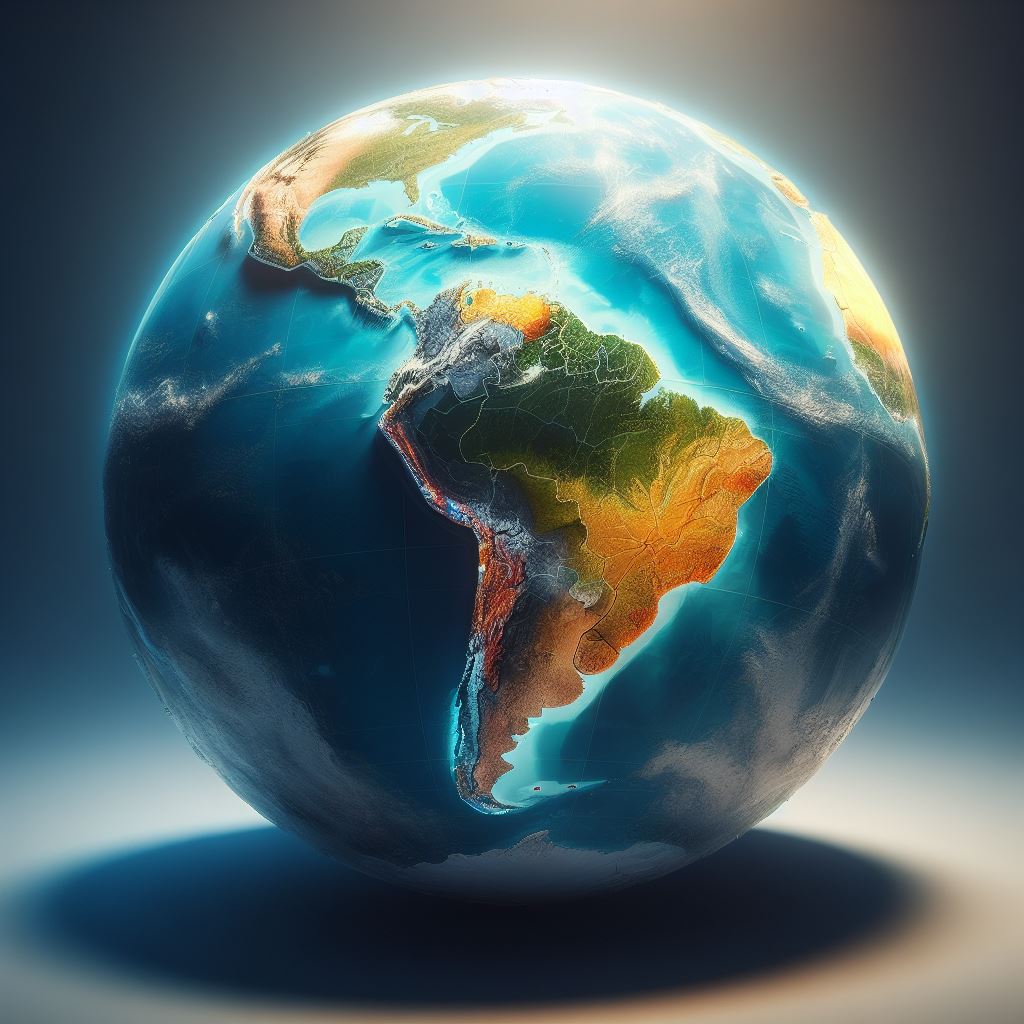
South America is natively referred to by biologists as the "Bird Continent" because it holds over 3,000 distinct bird species - far more than any other continent on Earth. In sharp contrast to Europe, South America has the shortest coastline relative to its total land area of any continent. Its smooth, triangular shape means it lacks the deep, fractal-like bays and gulfs found in the northern hemisphere.
Argentina
Argentina is home to the world’s widest avenue, Avenida 9 de Julio, located in Buenos Aires. It spans 140 meters (459 feet) and features a striking obelisk. The country is famous for its passionate tango dance, which originated in the working-class neighborhoods of Buenos Aires.
Bolivia
La Paz is the highest administrative capital city in the world, situated at an elevation of 3,650 meters (11,975 feet).
Lake Titicaca, shared with Peru, is the highest navigable lake globally, nestled in the Andes Mountains.
Brazil
Brazil is so massive that it shares a land border with every single country in South America except two (Ecuador and Chile).
There are way way way more people who speak Portuguese in Brazil than there are in Portugal itself.
Brazil is renowned for its vibrant Carnival celebrations, especially in Rio de Janeiro. Samba dancers, colorful costumes, and lively parades fill the streets.
Chile
Chile is home to the driest desert on Earth, the Atacama Desert. Its arid landscape is dotted with salt flats, geysers, and unique rock formations.
Easter Island, a Chilean territory, is famous for its mysterious giant stone statues called moai.
Colombia
Colombia produces some of the world’s finest emeralds. The Muzo mine in Colombia is renowned for its high-quality gemstones.
Ecuador
Ecuador’s name refers to the equator, and the Mitad del Mundo monument commemorates the line, although modern measurements place the exact equator several hundred metres from the monument.
In 2008, Ecuador became the first country to officially recognize the rights of nature.
The Galápagos Islands, part of Ecuador, inspired Charles Darwin’s theory of evolution due to their unique wildlife.
Guyana
Guyana is the only sovereign South American country whose official language is English.
The Kaieteur Falls in Guyana is one of the world’s tallest single-drop waterfalls, surrounded by pristine rainforest.
Paraguay
Paraguayans have a strong tradition of drinking tereré, a refreshing cold herbal tea served in a gourd with a metal straw.
The Itaipu Dam, shared with Brazil, is one of the largest hydroelectric power plants globally.
Peru
Cerro Blanco in the Sechura Desert near Nazca is one of the world’s tallest known sand dunes. Cerro Blanco measures an impressive 3,860 feet from base to summit.
Peru is home to the ancient Inca citadel of Machu Picchu, a UNESCO World Heritage Site and one of the New Seven Wonders of the World.
It is also home to the Nazca Lines, mysterious geoglyphs etched into the desert floor, which remain an enigma.
Suriname
Suriname is the smallest country in South America but boasts incredible biodiversity, including jaguars, giant river otters, and diverse bird species. The capital city, Paramaribo, features well-preserved Dutch colonial architecture.
Uruguay
Uruguayans take their mate (a traditional herbal drink) seriously. Sharing mate is a social ritual, often accompanied by conversation. Punta del Este, a popular beach resort, attracts visitors with its stunning coastline and vibrant nightlife.
Venezuela
Venezuela is home to the Angel Falls, the world’s highest uninterrupted waterfall, plunging from Canaima National Park’s Auyantepui Mountain.
Venezuela has a rich musical heritage, including the lively rhythms of joropo, a traditional musical style featuring instruments such as the cuatro, harp, and maracas.
Oceania
Oceania is a captivating region comprised of numerous islands scattered across the central and southern Pacific Ocean. There are 14 countries in Oceania, largest of which is Australia.
Australia
Australia is home to fascinating monotremes, mammals that lay eggs but nurse their babies with milk. All five living species of monotreme live in Australia and New Guinea.
Its currency, the Australian Dollar, is waterproof and hard to counterfeit.
The Great Barrier Reef, off Australia’s coast, is the world’s largest coral reef system.
Federated States of Micronesia
The Federated States of Micronesia is a country made up of four states — Yap, Chuuk, Pohnpei, and Kosrae — spread across 607 western Pacific islands. These 607 islands are scattered across an ocean area of nearly 1 million square miles, making it one of the most geographically spread-out nations on Earth.
The islands were colonized by Spain in 1886, sold to Germany in 1899, occupied by Japan from 1914 to 1944 and then administered by the U.S. before the Federated States of Micronesia became independent in free association with the United States in 1986.
Truk Lagoon in Micronesia is home to over 60 shipwrecks of Japanese warships destroyed during World War II.
Micronesia is one of just 22 countries without an army; the USA provides aid and defense in return for maintaining military bases there.
New Zealand
New Zealand boasts stunning landscapes, including fjords, geysers, and the famous movie set used for "The Lord of the Rings" movie trilogy.
Snake-Free Zone - there are no snakes in New Zealand.
New Zealand still has more sheep than people, but the ratio has declined sharply; about 23.3 million sheep were recorded in 2024, or roughly four sheep per person.
New Zealanders affectionately refer to themselves as Kiwis. The New Zealand dollar is also known as the Kiwi in international financial markets, and the dollar coin features a kiwi bird.
Wellington, New Zealand’s capital, holds the distinction of being the southernmost national capital in the world, situated at latitude 41.2° South.
Fiji
Fiji consists of more than 300 islands. In 2011, Fiji changed its relationship with the International Date Line so that its islands would share the same calendar day.
Kiribati
Kiribati is the only country that lies in all four hemispheres because its islands cross both the equator and the 180-degree meridian. Its islands are scattered across a huge area of the central Pacific Ocean.
Marshall Islands
Bikini Atoll gave its name to the modern bikini swimsuit, which was introduced around the same period as nuclear tests at the atoll. Many Marshall Islands are only slightly above sea level, making them especially vulnerable to rising seas and storm surges.
Nauru
Nauru is the world’s smallest island country by land area. It has no official capital, although most government offices are located in the district of Yaren.
Palau
Jellyfish Lake is famous for its large population of golden jellyfish, which are generally harmless to swimmers. Palau also created one of the world’s largest marine sanctuaries to protect its coral reefs, fish, and other ocean life.
Papua New Guinea
Papua New Guinea has more than 800 languages, making it one of the most linguistically diverse countries in the world. Birds-of-paradise are a national symbol, and their elaborate feathers and courtship displays are among the most unusual in nature.
Samoa
Samoa changed sides of the International Date Line in 2011 and skipped an entire calendar day. Traditional Samoan tattoos have deep cultural meaning, and the designs represent identity, status, family, and service to the community.
Solomon Islands
The Solomon Islands consist of hundreds of islands spread across the Pacific. Guadalcanal was the location of a major World War II campaign, and relics from the fighting remain in the jungles and surrounding waters.
Tonga
Tonga is the only remaining Polynesian monarchy. It consists of more than 170 islands, although only a small portion of them are permanently inhabited.
Tuvalu
Tuvalu is one of the smallest and lowest-lying countries in the world. Its internet domain, .tv, is valuable because it is associated with television and is licensed to companies and broadcasters.
Vanuatu
Vanuatu is one of the most linguistically diverse countries relative to its population. On Pentecost Island, the traditional land-diving ceremony involves people jumping from tall wooden towers with vines tied around their ankles, and it helped inspire modern bungee jumping.
 What's New?