How do you solve guess the pokemon Ravel with type and letter clues?
To solve guess the pokemon, treat every result in the Guess the Pokémon round as a filter. Narrow your candidate list after each guess.
What does the Guess the Pokémon board show after each guess?
Ravel hides one first-generation Pokémon. You have seven tries, and the answer appears after the seventh.
The answer also appears after an early match, a loss, or a give-up.
Each guess in the guess the pokemon round is compared with four attributes, or details about the hidden name. They are Type 1 and Type 2, the first and second type slots, #Letters, and Last letter.
#Letters checks the name length. Last letter checks the final letter.
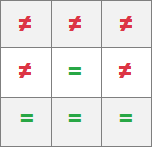
The board uses = when an attribute matches and ≠ when it does not.
The board marks Last letter as a high-voltage clue. Outside Practice, one missed high-voltage clue ends the round. Practice allows one high-voltage miss.
Name-color feedback works separately. It uses alphabetical order and matching starting letters.
To enter a guess, type the first three letters of a name. Pro and Superpro require four letters. Then choose a name from the dropdown and press Submit. You can also type the full name.
An Egg appears when you miss a name or attribute clue that an earlier guess already revealed. Eggs lower your score even if you solve the round.
You lose when you exceed the maximum tries, Egg limit, or time limit.
The level settings are:
| Level | Time | Points | Max Eggs |
|---|---|---|---|
| Practice (L1) | 7 min | 10 | 7 |
| Challenge (L2) | 5 min | 100 | 5 |
| Precision (L3) | 5 min | 200 | 3 |
| Pro (L4) | 3 min | 500 | 1 |
| Superpro (L5) | 3 min | 1000 | 0 |
Fast mode lasts one minute and doubles the points. You choose the level and speed before the round starts. The Ravel overview covers the wider setup, while the Pokémon round uses the four attributes above.
Why should Type 1 and Type 2 be read as separate slots?
Treat Type 1 and Type 2 as ordered slots. The board compares each slot separately.
Type 1 = Grass with Type 2 ≠ Poison leaves one candidate list. Type 1 ≠ Grass with Type 2 = Poison leaves another.
Order matters for matching pairs, too. Type 1 = Water, Type 2 = Ice differs from Type 1 = Ice, Type 2 = Water.
Keep both slots in your notes instead of writing only “Water/Ice.”
This compact first-generation reference gives you useful branches:
| Type 1 | Type 2 | First-generation examples |
|---|---|---|
| Grass | Poison | Bulbasaur, Oddish, Bellsprout |
| Bug | Flying | Butterfree, Scyther |
| Poison | Flying | Zubat, Golbat |
| Rock | Ground | Geodude, Onix, Graveler |
| Water | Ice | Dewgong, Cloyster, Lapras |
| Single-type candidate | None | Pikachu, Mewtwo, Ditto, Tangela |
Keep single-type candidates in their own group until the Type 2 result helps remove them. The board checks the exact type identity in each slot.
How do #Letters and Last letter narrow the candidate list?
Use the displayed #Letters value as a hard filter. A candidate with the wrong count leaves the list, even when both type slots look promising.
Do not replace the board’s number with a guess based on how the name appears.
Last letter gives a separate check. Cross out candidates when their final letters conflict with the known result.
Use four columns in your scratch note:
| Type 1 | Type 2 | #Letters | Last letter |
|---|---|---|---|
= or ≠ | = or ≠ | = or ≠ | = or ≠ |
Write one candidate under the same four headings. Cross out a name as soon as one field conflicts.
That keeps the type data and word shape together.
In guess the pokemon, the Pokémon round combines type data with name structure. Use both kinds of evidence at the same time. If an earlier guess revealed a useful value, follow it on every later guess to avoid an Egg.
Which name colors set the alphabetical boundaries?
Name colors provide alphabet-order clues.
A red guess means the hidden name comes alphabetically earlier. Move toward A.
A blue guess means the hidden name comes alphabetically later. Move toward Z.
GuessAndMatch says, “Red is hot, go colder.”
Keep two boundaries in your notes. A red guess becomes the upper boundary because the answer must come before it. A blue guess becomes the lower boundary because the answer must come after it.
The hidden name sits alphabetically between the red and blue clue names when both boundaries exist.
Green first letters reveal matching starting letters. Second-letter feedback appears only after the first letter matches.
Do not use a second-letter color before that condition is met. Black and gray letters give no clue, so leave them out of your filter.
This prevents a common mistake. A name can fit both type slots and still be impossible because it falls outside the alphabet range.
Apply the name boundary after the attribute checks.
When should your next guess test a new type pair?
Give your tries different jobs. Use the first guess to open a useful branch, then let every result shorten the list.
- Start with a familiar first-generation name that tests a useful type pattern. Record Type 1, Type 2,
#Letters, Last letter, and the name color. - Filter by Type 1. Keep single-type candidates separate from candidates with two types.
- Filter by Type 2. Remove a candidate when its second slot conflicts, even if its combined types seem familiar.
- Apply
#Letters. Cross out every name with the wrong displayed count. - Check Last letter before submitting. A candidate that fails the known final-letter clue is not a safe guess.
- Set the alphabetical lower and upper bounds from red and blue results. Use green first-letter or second-letter feedback when available.
- Choose a candidate that fits every known clue and tests an unresolved field. Check the full list again before submitting.
Do not repeat a familiar name simply because you remember it quickly. A new guess should either confirm a narrow candidate group or test a clue that remains open.
You still need to obey every clue from earlier guesses. Choose a level that matches how many missed clues you can absorb.
Before each submit, check:
- Type 1 fits.
- Type 2 fits, or the candidate remains in the single-type group.
- The displayed
#Lettersvalue fits. - Last letter fits.
- The name sits inside the alphabet boundaries.
- Follow every earlier clue.
A text-first way to use the Pokémon clues
In guess the pokemon, the Pokémon round uses attribute results and alphabetical name order as feedback. The Pokémon round suits a player who knows the first-generation roster and wants deduction from feedback in a pokemon guessing game.
For a separate color-focused Ravel round, try Guess the Color. Keep that topic’s clue system separate from the Pokémon board.
Carry four checks into the next round of guess the pokemon: type slots, displayed letter count, Last letter, and alphabet bounds. Play today's round on GuessAndMatch.
 What's New?