How can a guess the country flag quiz help you win Guess the Country?
A guess the country flag quiz shows a flag and asks you to name the country.
GuessAndMatch's Ravel country round takes a different route. It asks you to name a hidden country. The board returns attribute clues, which check country facts, and alphabetical feedback.
That difference gives flag knowledge a useful job. Flag recognition creates a shortlist. The board tests that shortlist with country attributes and name order.
GuessAndMatch's Guess the Country round is a text-based country round. It offers no outline or displayed flag to identify.
What a guess the country flag quiz gives you, and what the country round actually gives you
In a standard flag quiz, the image carries the main clue. You inspect its colors, bands, layout, or emblem. Then you name the country that matches the design.
GuessAndMatch's country round hides the country name. You submit a country, then receive feedback about that guess. The page returns attribute clues and alphabetical name clues.
An attribute is a fact the board checks about a country.
Use the two formats in sequence. Let flag knowledge suggest a country. Then let the GuessAndMatch board decide whether that country belongs on your shortlist. A familiar design starts the process. The returned clues choose the next guess.
This approach helps when several flags look similar. Treat your first visual hunch as a testable candidate.
How GuessAndMatch's country round turns a guess into evidence
GuessAndMatch's country round follows the Ravel format. The Ravel name-guessing format uses seven tries to find a hidden name through attributes and name colors.
An attribute is a fact the board checks about a country. A lightning marker, shown as ⚡, identifies a high-voltage attribute.
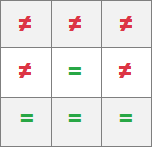
The Guess the Country round compares four of them:
Continent⚡, the country’s continentArea level, its broad size categoryLast letter⚡, the final letter of its name#Words, the number of words in its name
A = means your guess matches the hidden country on that attribute. A ≠ means it does not match.
Practice allows one missed ⚡ attribute. Every other level ends your game at the first ⚡ miss.
The board also gives alphabetical feedback through name colors. A red guess means the hidden name comes earlier alphabetically, so move toward A. A blue guess means it comes later, so move toward Z. Green first letters show the starting letters of the hidden name. The second letter receives a color only after the first letter matches. Black or gray letters give no clue.
When red and blue guesses create an alphabet range, keep the hidden country between them. That range can break a tie between countries from the same region.
Use continent and area before you trust a familiar design
If you try to guess the countries of the world from flags, build your shortlist in two passes. Let the visual create one candidate. Then check its continent first. After that, check its Area level.
Only then should you use flag colors, bands, or emblems to separate similar candidates. The design still matters. The returned attributes carry more weight than a familiar design.
Continent⚡ deserves special attention because it is high voltage. A familiar flag should never outweigh a continent mismatch on the board. If a candidate conflicts with the returned continent, move on. Spend the next guess on a different candidate.
Area level gives you a second filter. Broad size groups make an exact square-mile figure unnecessary. Ask whether your candidate is clearly too small or too large for the result. Set it aside when the answer is obvious.
This gives you a practical shortlist. Start with a country suggested by the flag. Keep another country that shares a similar design. Use continent and size to decide which one deserves the next guess.
Let a mental map confirm the candidate
In a “guess country on map” prompt, the outline or position supplies the visual clue. The GuessAndMatch country round uses board feedback instead. The board supplies no map or coastline to identify.
A quick mental map check can still help. Picture where your candidate sits. Does it fit the returned continent? Does its broad size make sense beside that result? Replace the candidate when either check fails.
Keep this check short. Use geography only to verify a visual hunch.
For more location-based formats, browse Geography Guessing Games. Use the map as a private check before returning to the country round's actual clues.
Turn emoji associations into memory checks
When you guess the country by emoji, treat the symbol as a memory prompt. A flag emoji can bring one country to mind quickly. That association can start your shortlist.
The GuessAndMatch country page uses no emoji clue to decode. Verify the candidate through the board instead.
Check its Continent and Area level first. Then use Last letter and #Words to compare the name with the feedback already on screen. A candidate can look right in an emoji prompt and still fail the country round's attributes.
Use the alphabetical colors after the first result. Red means the hidden country comes earlier than your guess. Blue means it comes later. Follow that direction when you choose the next country.
Emoji memory works best when it produces a name quickly. The board then tells you whether that name belongs in the current answer range.
Read a picture as a clue, then check the candidate
In a guess the country by picture prompt, pause before naming a country. Record what the image shows first. Note the layout, emblem, color order, or landmark feature.
Then separate observation from assumption. An observation describes something visible in the image. An assumption connects that detail to a country. Keeping them apart helps you spot a guess built on one familiar symbol.
Use the picture to form a candidate. Check that candidate against Continent, Area level, Last letter, and #Words before you submit it. The picture supports the shortlist. The board decides whether the candidate fits.
The promoted country round uses text and attributes rather than a picture. For a separate image-led prompt, PiX Trivia shows a pictured landmark. You identify the country where that landmark is located.
Carry a short visual-to-attribute check into the next round
Use this order after each result:
- Form one visual candidate. Start with a flag memory, an emoji association, a mental map, or details from a picture. Keep one backup candidate in mind.
- Check
Continent. Compare the candidate with the returned continent. Replace the candidate when the two values do not match. - Check
Area level. Remove candidates that clearly sit outside the returned size group. - Use
Last letter. Apply the match or mismatch to every candidate you consider next. - Use
#Words. Count the words in each country name before submitting. - Read the name colors. Red sends you toward A. Blue sends you toward Z. Green first letters narrow the starting point.
- Submit or switch. Submit when the candidate fits every known check. Switch when one of those checks conflicts.
A new guess should test new evidence. Use a different spelling or nearby country only when it tests new evidence.
Flag recognition, emoji memory, map knowledge, and picture details create the shortlist. The GuessAndMatch board supplies the final evidence.
 What's New?